Hochfrequenzspindel (HF-Spindel)
Werkzeugmaschinenspindel mit direkt auf der Spindelwelle integriertem Hochfrequenz-Elektromotor für höchste Drehzahlen, kompakte Bauweise und maximale Rundlaufgenauigkeit.

Quick Definition: A high-speed electric motor is a direct-drive electric machine engineered for elevated rotational speeds – built either as a permanent-magnet synchronous motor or as a squirrel-cage asynchronous (induction) motor. Higher speed enables substantial downsizing and high power density.
Both motor topologies offer distinct engineering strengths for high-speed industrial drives:
Reliable high-speed operation depends on integrated electromagnetic, thermal, rotordynamic, and super-precision bearing design. Explore standard and custom drives under GMN Electric Drives.
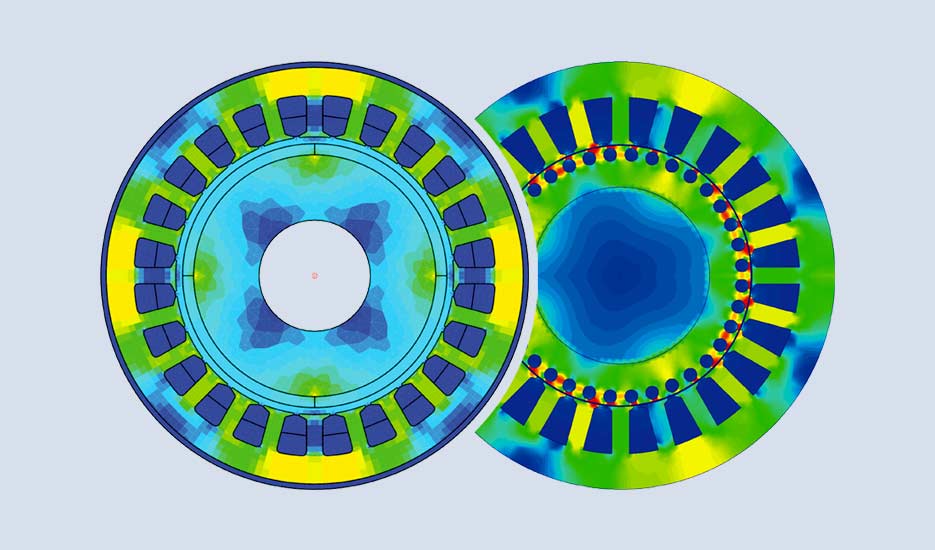
Cross-sectional electromagnetic analysis of a GMN high-speed built-in electric motor.